
How to account for reserve funds without commingling
As you sit down with your board, you’re managing two different pools of money: the operating funds and the reserve funds. The operating fund covers the everyday costs of running the community such as utilities, landscaping, management fees, and insurance premiums. The reserve fund is your savings for the big, infrequent projects, like roof replacements, road resurfacing, pool renovations, elevator overhauls, HVAC systems in shared buildings, exterior painting, and structural repairs.
Now, associations across the country hold roughly $31 billion as reserves for this kind of project. And yet most are still underfunded. Association Reserves review found that about 74% of U.S. HOAs fall short. Probably that’s because of the rising construction and materials costs play a part, and so does the closer scrutiny that followed the 2021 Champlain Towers South collapse in Surfside, Florida.
Keep in mind that when I say “underfunded”, it means holding less than 70% of what you should have by now. About a third of associations sit below 30%, which the industry labels critically weak, and those are the communities most likely to face a sudden special assessment. Now, many things push associations into that position, but one of the most overlooked is structural: reserve and operating money were never truly separated, either at the bank or in the books.
Nobody has to commit fraud for this to go wrong. Reserve dollars drift toward daily expenses simply because that’s how money behaves in a loosely organized account. So let’s walk through how to account for reserve funds without commingling, starting with why the separation matters, how to do it, and finally how to automate it.
Why you need to separate reserve funds and operating funds
GAAP and FASB ASC 972
Let’s start with the accounting rulebook. In 1991, the American Institute of Certified Public Accountants issued Audits of Common Interest Realty Associations, the first industry-specific accounting guidance for condominiums, HOAs, co-ops, and timeshares. That guidance was later folded into the FASB Codification as ASC 972, effective July 1, 2009, and it’s what CPAs follow when they prepare or report on your financial statements.
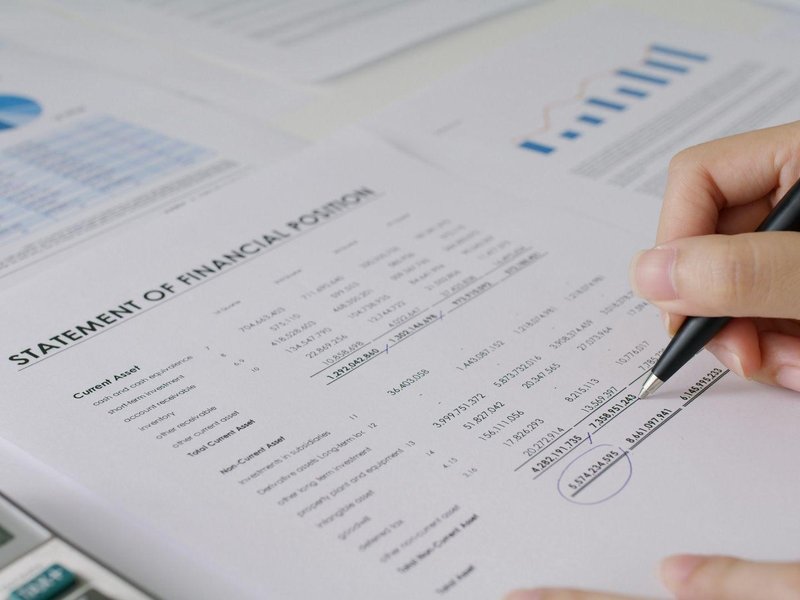
What ASC 972 asks for is fund accounting. Assessments you collect for future major repairs and replacements belong in a reserve fund, and your financial statements must show it separately from operations. When money moves between the two, it’s recorded as an interfund transfer in the statement of changes in fund balances, never as revenue. That means you can’t pull cash out of reserves and book it as income to make the operating budget look balanced. Also, ASC 972 requires disclosures about the remaining useful life of your major components, their replacement costs, and your reserve funding policy.
IRS tax implications
Federal tax rules add a second layer. Most associations elect to file under Internal Revenue Code Section 528 using Form 1120-H. Under that election, assessments you collect and place in a segregated account for capital improvements are excluded from taxable income as exempt-function income. But it’s conditional.
The IRS views a single account holding both reserve and operating money as a red flag. If you can’t show that reserve dollars were clearly earmarked for capital projects and held in a designated account, the agency can reclassify those contributions as taxable income.
If your association files as a regular corporation under Section 277 instead, reserve money that flows through the operating account can become “tainted” and generate taxable income. And remember that staying compliant under Section 528 means keeping separate books and records for exempt and non-exempt income. If you fall short, you could lose the election, be forced to re-file under Form 1120, and lose the benefit retroactively.
State laws
Federal rules set the floor, but state law is where the most specific obligations live, and since 2021 the trend has moved toward more mandates. Here are the states that talk about separation:
- California: Civil Code § 5510 bars you from spending reserves on operating expenses except under a narrow set of documented conditions. Civil Code § 5550 requires a visual-inspection reserve study at least every three years, with a review each year.
- Florida (HOAs): F.S. 720.303 says reserve and operating funds shall not be commingled. Even if your software tracks the split internally, using a single bank account causes legal ambiguity.
- Florida (condos): F.S. 718.112(2)(f) requires you to disclose whether you’re funding reserves at statutory levels, how much you hold, and the estimated funding needed over the next ten years. That disclosure goes in the budget summary owners receive at least fourteen days before the budget meeting.
Lenders and insurers
The next layer comes from the institutions that decide whether units in your building can be bought, sold, or financed at all. Fannie Mae and Freddie Mac buy mortgages from lenders, and since lenders only originate loans these agencies will purchase, their standards effectively govern most conventional home loans. If your reserves drop below their thresholds, your building can lose “warrantable” status, and once that happens, conventional financing simply isn’t available for units in your community.
Now, those thresholds are rising. Under Fannie Mae Lender Letter LL-2026-03 and Freddie Mac’s matching bulletin from March 2026, the minimum reserve contribution goes from 10-15% of annual budgeted assessment income for loan applications dated on or after January 4, 2027. And something arrived even sooner: on August 3, 2026, Fannie Mae eliminated its Limited Review process, which had let roughly 40% of condo loans close without anyone looking at the association’s budget or reserves.
Now those loans get a Full Review covering your budget, reserve funding, insurance, delinquency rates, pending litigation, and special assessments. So as you’re preparing for the next buyer’s lender, remember that your reserve account is going to be examined more closely.
And insurers are tightening up too. Communities with thin reserves and deferred maintenance are seeing the steepest premium increases and, in some markets, trouble finding coverage at any price. For example, some Florida associations have reported increases of 50-200% over three years. So you want to keep your reserve account clean and healthy to avoid these increases.
Board members’ fiduciary duty
Every board member is a fiduciary, someone entrusted with managing assets for others and bound by law to act in their best interests. That comes with concrete obligations around reserves. In Ravens Cove Townhomes, Inc. v. Knuppe Development Co. (1981), a California court held that failing to establish and maintain adequate reserves breached the directors’ duties of good faith and basic good management, and it held the individual directors personally liable. The court also noted that a breach can happen when a director stays passive and lets mismanagement continue.
Something worth mentioning is that you shouldn’t lean on the Business Judgment Rule for comfort. It protects decisions made in good faith, after reasonable investigation, with the association’s best interests in mind. But it’s a defense your board has to plead and prove, and it doesn’t cover a board that never investigated or did nothing. If you know your reserve and operating money are tangled together and you leave it that way, you’ve moved into that territory.
Fund balance accounting
Beyond the outside mandates from accounting standards, tax law, state statutes, and lenders, there’s your internal reason to separate funds: you need to know where your money actually is. For example, misclassifying a capital project as an operating expense, or paying a routine service contract out of reserves, warps the picture over time.
In fact, AICPA guidance recommends reporting on a fund balance basis, tracking income and expenses by the fund they belong to (such as Operating, Reserves, and Other) rather than through one general ledger that treats everything as a single pool.
How to set up a separate reserve fund account
Open a dedicated reserve bank account
Everything else you’ll build rests on one simple move: a physically separate bank account that holds nothing but reserve money. That means its own account number, its own statement, and its own balance.
As you’re picking the account type, I suggest you use a money market account for reserves because it earns interest and still lets you reach the cash when a capital project is ready to go. If you’ve built up a large balance ahead of a big planned expense, you can ladder certificates of deposit to line up with the timeline in your reserve study, so money matures in phases as you actually need it. The one rule: no CD should mature after the date you’ll need the cash.
Something else to note: FDIC insurance covers up to $250,000 per depositor, per insured institution, and all of your association’s accounts at one bank count as a single depositor. Opening a second account at the same bank doesn’t add coverage.
If your reserves are above that line, you have two options: spread deposits across several FDIC-insured banks, or use IntraFi’s ICS or CDARS programs. They split a large deposit into pieces under $250,000 across a network of more than 3,000 institutions, while you deal with one bank and get one consolidated statement.
Update your chart of accounts
A separate bank account fixes the banking half of the problem. The bookkeeping half happens in your chart of accounts. Most associations use a block-numbering system. The 1000 series covers assets, with operating cash commonly at 1010 and the reserve account at 1020. The 2000 series covers liabilities. The 3000 series covers fund balances, and you’ll want the operating fund balance and the reserve fund balance sitting in separate equity accounts. On the reserve side, you’ll set up:
- A reserve cash account
- A reserve fund equity account
- An income account for reserve contributions
- Separate expense accounts for each component category, such as roofing, pavement, pool, elevator, HVAC, and building envelope
Here’s a point that trips up a lot of treasurers, so pay attention as you’re setting this up. Your monthly reserve contribution is a transfer between funds, not an expense. It moves cash from operating to reserves and shifts fund balance from one equity account to the other. If you book it as an operating expense, you double-count the money and skew your income statement.
The riskiest mistake is letting reserve and operating activity overlap in the same account ranges. It muddies your solvency picture and puts you on the wrong side of your fiduciary duties. Use separate bank accounts and sub-accounts to keep things clean. In fact, a standardized chart with proper block numbering cuts categorization errors by up to 30%.
And this is where your software matters. General-purpose accounting tools such as QuickBooks can’t enforce fund separation at the database level, and they usually can’t produce the reports many states expect, such as fund-level balance sheets, reserve contribution schedules, and percent-funded. So I recommend you go for software built for associations as it does the enforcing for you.
Establish a reserve transfer policy
With the accounts open and the chart built, you’re ready to put in writing how money moves in and who has to sign off before it moves out.
Split assessments at the point of deposit
The cleanest method is allocation-at-collection. You divide each owner’s payment into its operating and reserve portions the moment it’s received and posted, rather than dropping everything into operating and transferring the reserve share at month-end. That way, you avoid temporary commingling.
Require signatures before money leaves
The outflow side needs the same discipline. California Civil Code §5510(a) requires at least two signatures on any reserve withdrawal: two directors, or one director and one officer who isn’t a director. Civil Code §5380 adds a requirement for prior written board approval on transfers out of either account above set thresholds. For associations with 50 or fewer units, that’s $5,000 or 5% of estimated annual income. For 51 or more units, it’s $10,000 or 5% of annual income, whichever is lower.
In Florida, the recognized best practice is two authorized signatures, such as your treasurer and your president, on any check or electronic transfer from reserves above a threshold set in your bylaws. And because of this, I suggest you choose a bank that knows community associations. You want one that offers role-based access controls and dual-approval requirements for disbursements.
Treat interfund movement as a loan
Even the best community will hit a rough patch now and then, like a short-term cash crunch in operating. This is where you can make the most costly mistake: treating pulling reserve money into operating as a routine entry. It’s not a transfer. It’s a loan.
California Civil Code §5515 shows how it should work. Your board can authorize a temporary transfer from reserves to operating for short-term cash flow, but only after giving advance notice at a properly noticed open meeting. That notice has to explain why the transfer is needed, what repayment options exist, and whether you’re considering a special assessment.
If the board votes to go ahead, your minutes must include a written finding on why the transfer is necessary and how and when you’ll repay it. The money has to go back within one year. Going past that requires additional notice and documented evidence that the delay serves the community’s best interests. In your books, record it as an interfund loan: a receivable on the reserve side and a payable on the operating side, not revenue to operating.
Reconcile your reserve account as routinely as your operating account
Reconciliation is about comparing your internal records against the bank statement to catch missing deposits, duplicate entries, unauthorized activity, stale checks, bank fees, and timing differences. Most associations reconcile their operating accounts monthly. Do the same for the reserves. In fact, California has written this expectation into law. Civil Code §5500, as amended by AB 2912 in 2018, requires your board to review these items every month:
- A current reconciliation of the operating accounts
- A current reconciliation of the reserve accounts
- Actual revenues and expenses for the year versus budget
- The latest bank statements for both accounts
- An income and expense statement for both accounts
- The check register, monthly general ledger, and delinquent assessment receivable reports
How technology helps prevent commingling
Every control we’ve covered, from separate bank accounts to a structured chart of accounts, a transfer policy, the interfund loan protocol, and monthly reconciliation, is sound. The problem is that it’s almost impossible to do it month after month, through treasurer changes, board elections, and the everyday pressures of a volunteer board. And data proves this.
More than 20% of HOAs run into financial mismanagement due to things like missing receipts and skipped reserve transfers. And these aren’t failures of intention. They come from a lack of accounting expertise, manual processes, and generic spreadsheets. And on top of this risk, there’s an overwhelming workload. The good news is that you can automate most of these processes with an accounting platform. And here’s how that can help:
- Enforced fund accounting: The system builds separation into how transactions are processed. A reserve transaction can only be posted to a reserve account, and your reports come out at the fund level in the format most states expect.
- Allocation-at-collection: As we covered earlier, you don’t want the full assessment landing in the operating account and then getting split later. The software divides each payment at the moment it arrives, using the percentages in your approved budget, and posts each piece straight to its own account. That closes the window for temporary commingling.
- Automated reconciliation for both accounts: The software imports bank feeds automatically and flags unmatched transactions for review.
- Role-based access and approval workflows: The platform lets you control who sees and does what, usually with multi-factor authentication and audit logs on top. For instance, your treasurer can enter transactions and run reports but can’t release a reserve withdrawal without a second approval from a designated officer.
- Compliance reporting that generates itself: The software generates CPA and state-law-compliant financial statements, such as fund-level balance sheets and budget-versus-actual comparisons.
Final thoughts
Keeping reserve funds from mixing with operating money is moving from best practice to requirement due to the tightening state laws, fiduciary duties, and lender and insurance requirements. The good news is that that’s something achievable through a handful of habits: a dedicated bank account, a chart of accounts that keeps the funds distinct, a written transfer policy, a formal process for any interfund loan, and reconciliation every single month. And the best news is that after setting up a dedicated bank account and establishing a transfer policy, you can automate the other routine tasks with a management platform.